My quiet Sultanahmet route: Hagia Sophia, the Cistern, and the evening sema
I spent a quiet, reflective day tracing Byzantine stone in Hagia Sophia, descending into the cool Basilica Cistern, and listening to the reed flute at an evening sema ceremony.
Beginning in the Upper Gallery of Hagia Sophia
When I planned this walking day, my goal was deliberately narrow. Sultanahmet can easily overwhelm a travel notebook if I try to stitch together too many centuries before noon. As an editor, I know what happens when a text carries too many competing arguments; a city street behaves much the same way. I wanted to focus on volume, shadow, and stone, giving each space the breathing room it demanded.
I stepped off the T1 tram at Sultanahmet and walked toward the immense red-washed perimeter of Hagia Sophia. In my bag, I had packed a light silk scarf to cover my hair, and I wore trousers and long sleeves to meet the dress requirements of an active mosque. Rather than entering the ground-level prayer space, my ticket took me up the long, gently sloping stone ramp that leads directly to the upper galleries.
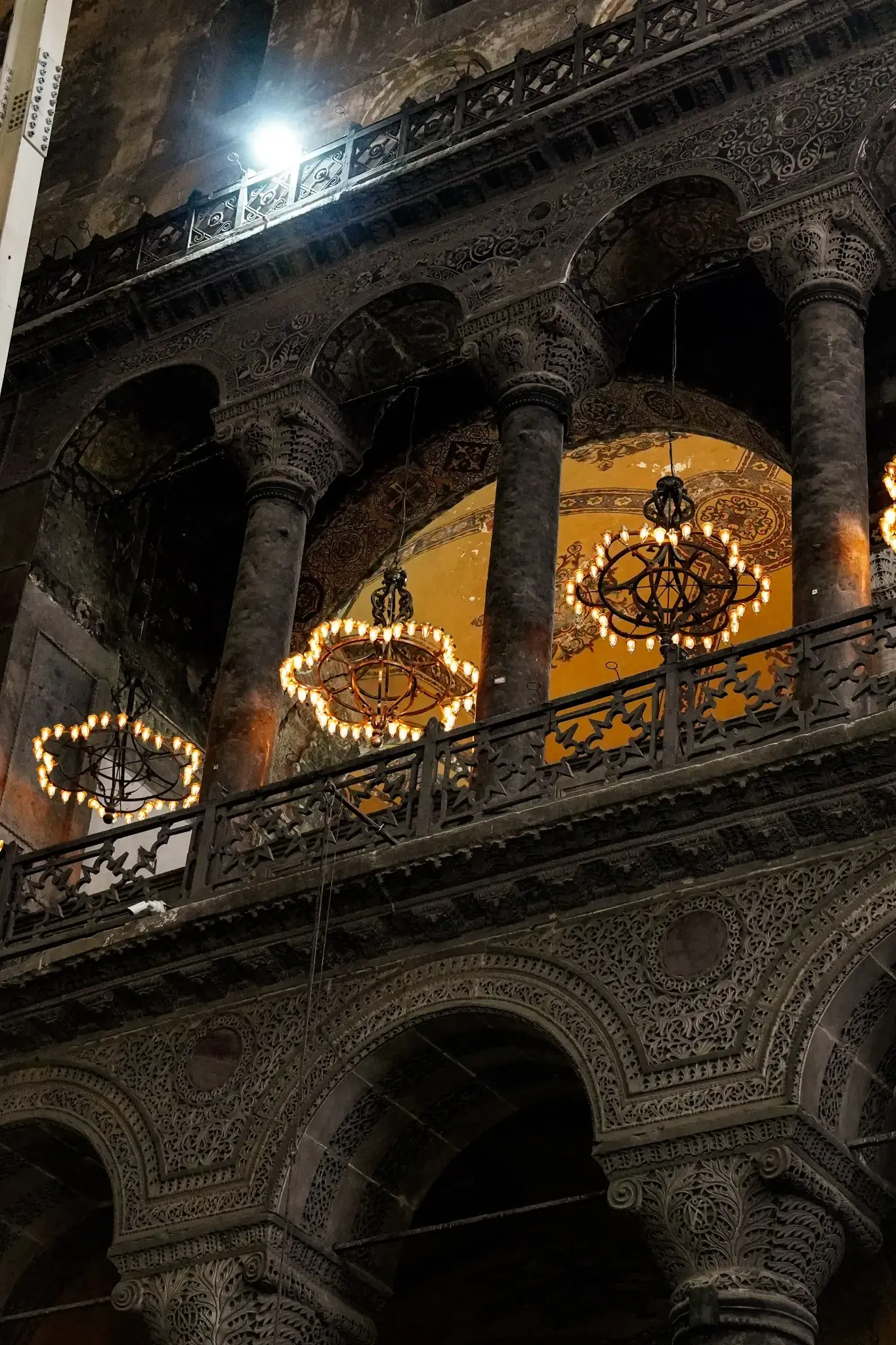
Emerging onto the marble gallery floors immediately shifted my sense of scale. From above, the great nave opened up beneath the central dome, anchored by the massive dark green calligraphic medallions suspended against the gold-flecked plaster. The air carried a hushed resonance—the sound of footsteps and distant murmurings rising up into the vast barrel vaults.
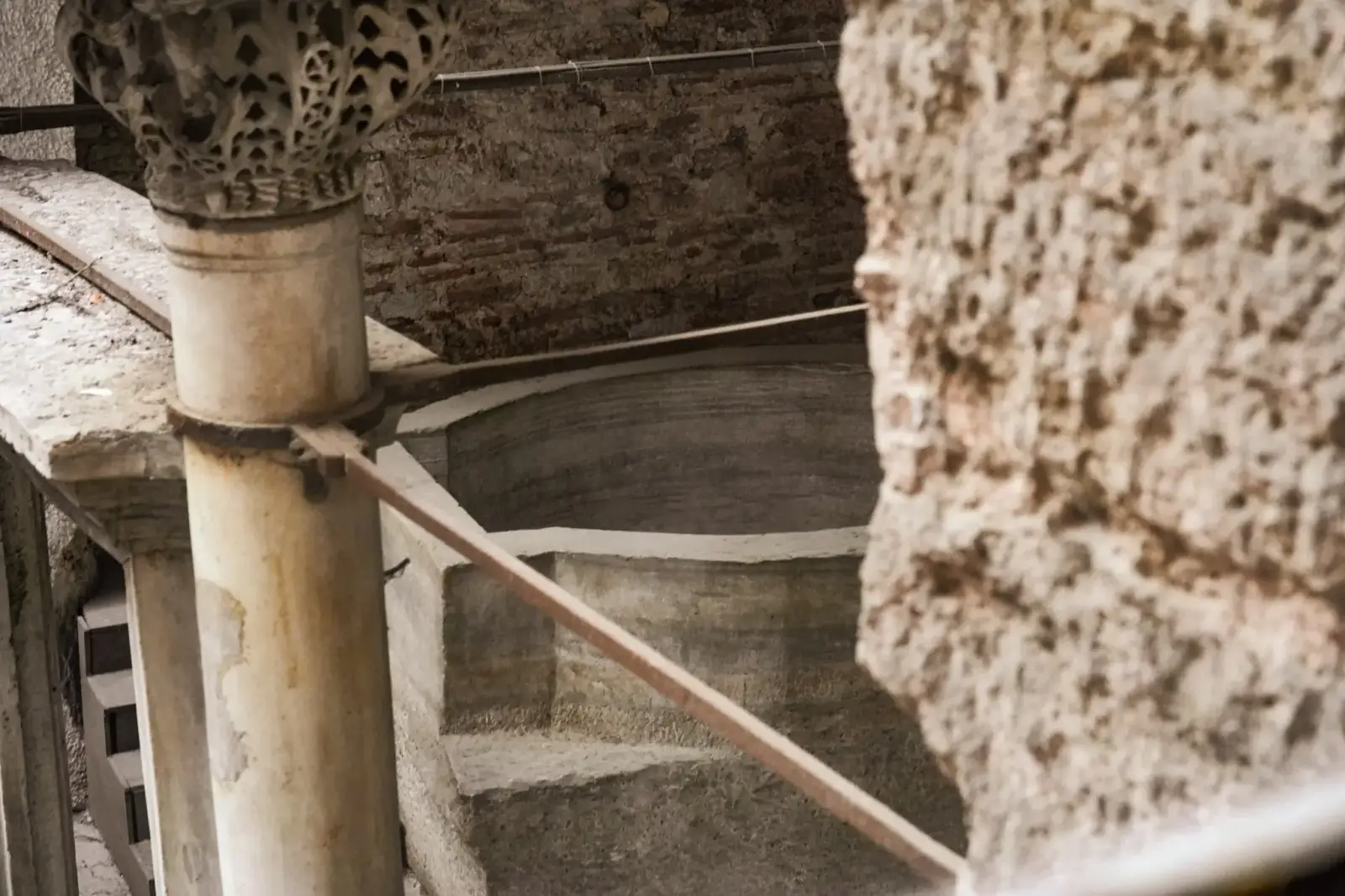
Walking slowly along the gallery arcades, I spent half an hour admiring the intricate details that are impossible to discern from below. The Byzantine capitals look almost lace-like, carved deeply into white Proconnesian marble with stylized acanthus leaves that catch the light filtering through the dome’s ring of windows.
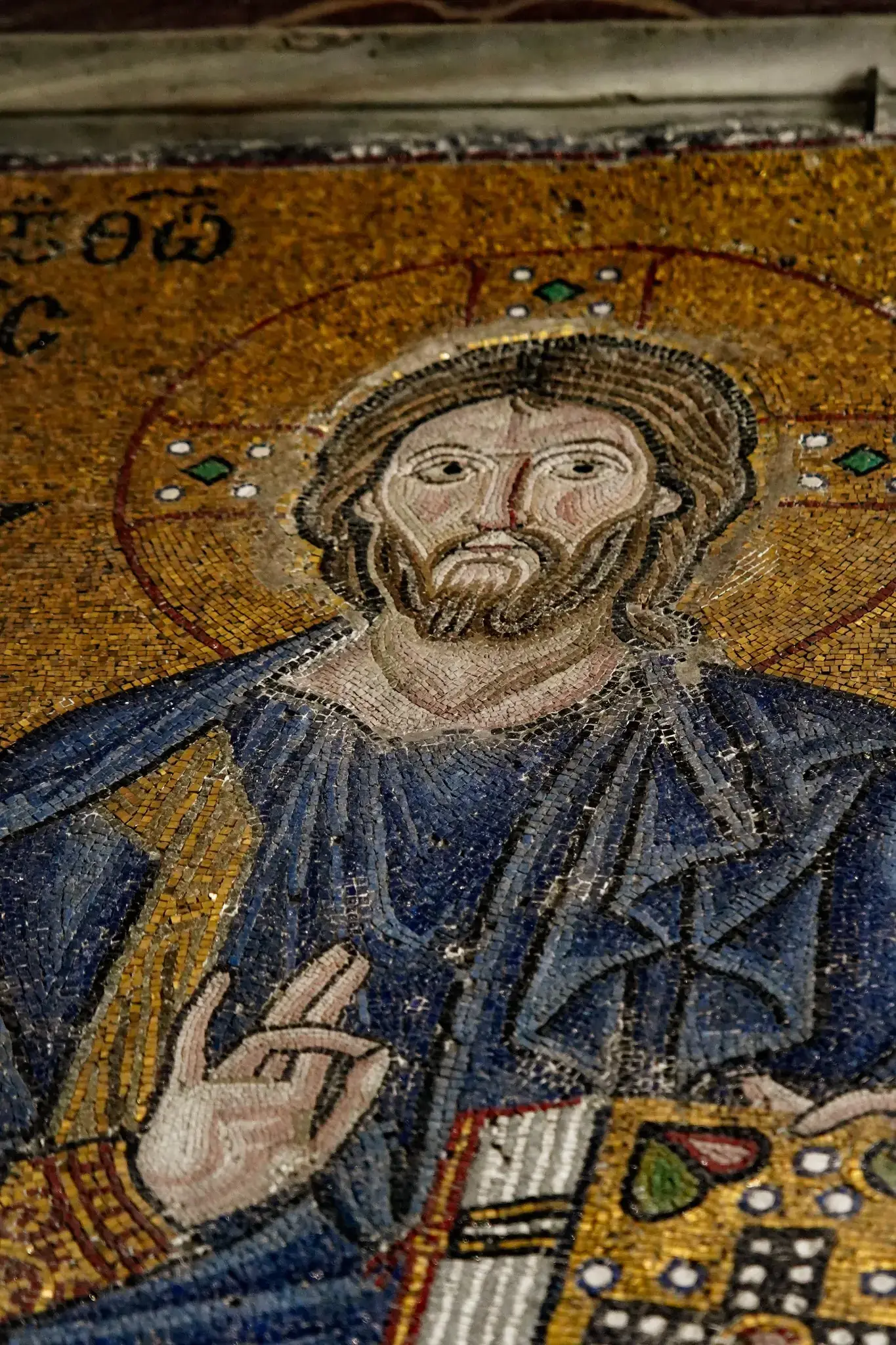
Further along the south gallery, I stopped in front of the Deesis mosaic. Even with significant portions of the lower wall missing, the preserved faces of Christ, John the Baptist, and the Virgin Mary possess an extraordinary emotional depth. The glass and stone tesserae are angled slightly outward, capturing ambient gallery light so that the eyes seem to shift as I moved along the barrier. I stood there for a long time, taking careful notes in my journal, completely absorbed in the quiet mastery of the eleventh-century mosaicists.
Leaving the gallery by the downward stone ramp, I stepped out into the open courtyard, feeling the transition from monumental Byzantine heights back into the crisp outdoor air.
Tickets and visiting hoursHagia Sophia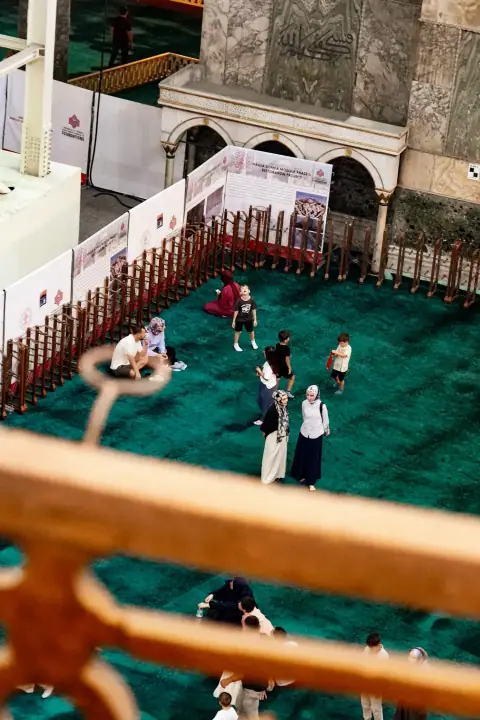
Under the Streets: The Forest of Columns
From the exit of Hagia Sophia, reaching the Basilica Cistern required only a short, straightforward walk. I crossed the pedestrian avenue, walked past the tram tracks along Divan Yolu, and found the entrance just across the square. The walking distance between the two monuments is barely two hundred metres, yet the sensory shift could hardly be more pronounced.
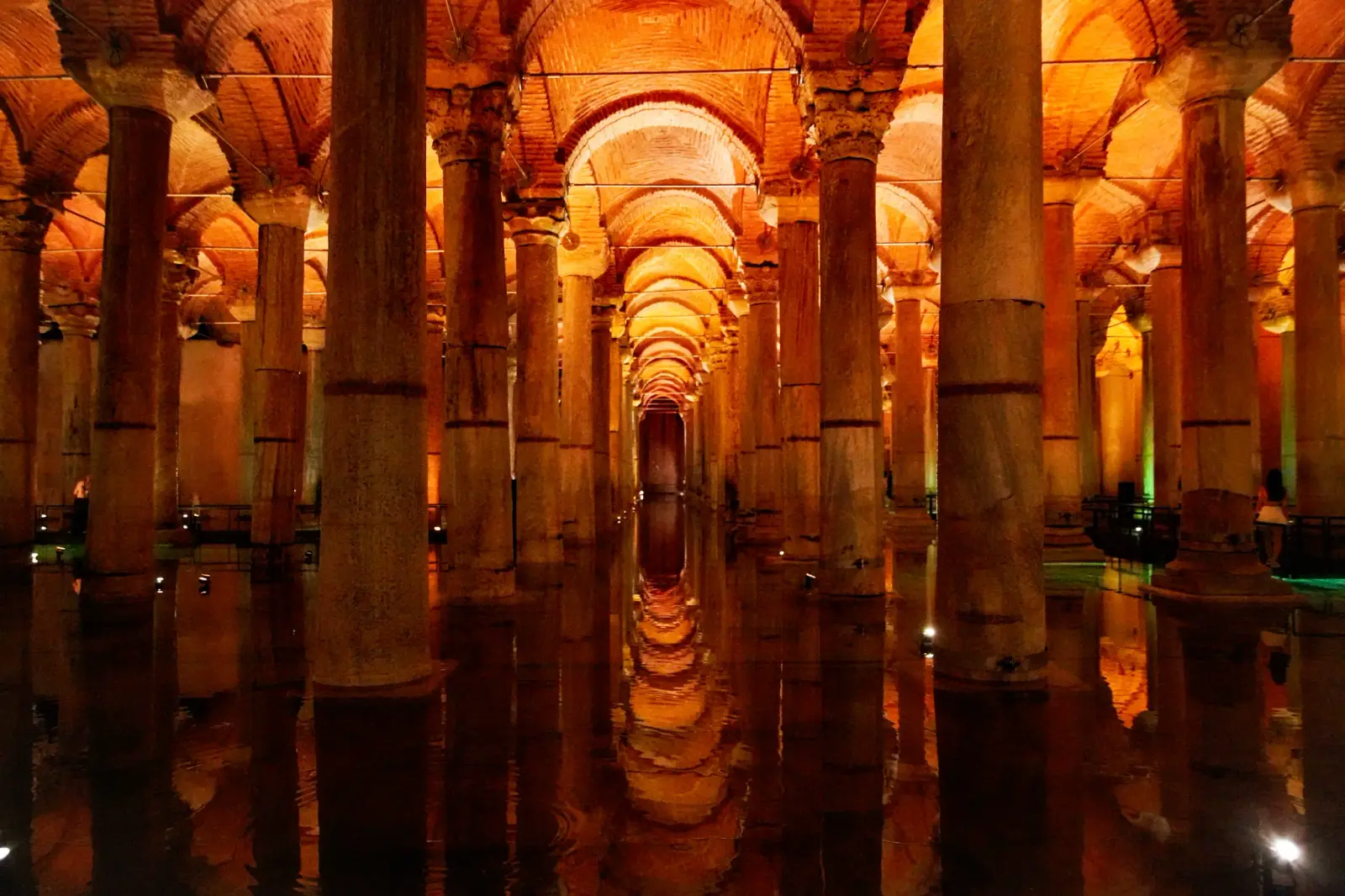
Descending the stone staircase beneath the city street, the warmth of Sultanahmet dissolved into damp, subterranean coolness. The sound of city traffic was replaced instantly by the rhythmic drip of condensation hitting shallow water.
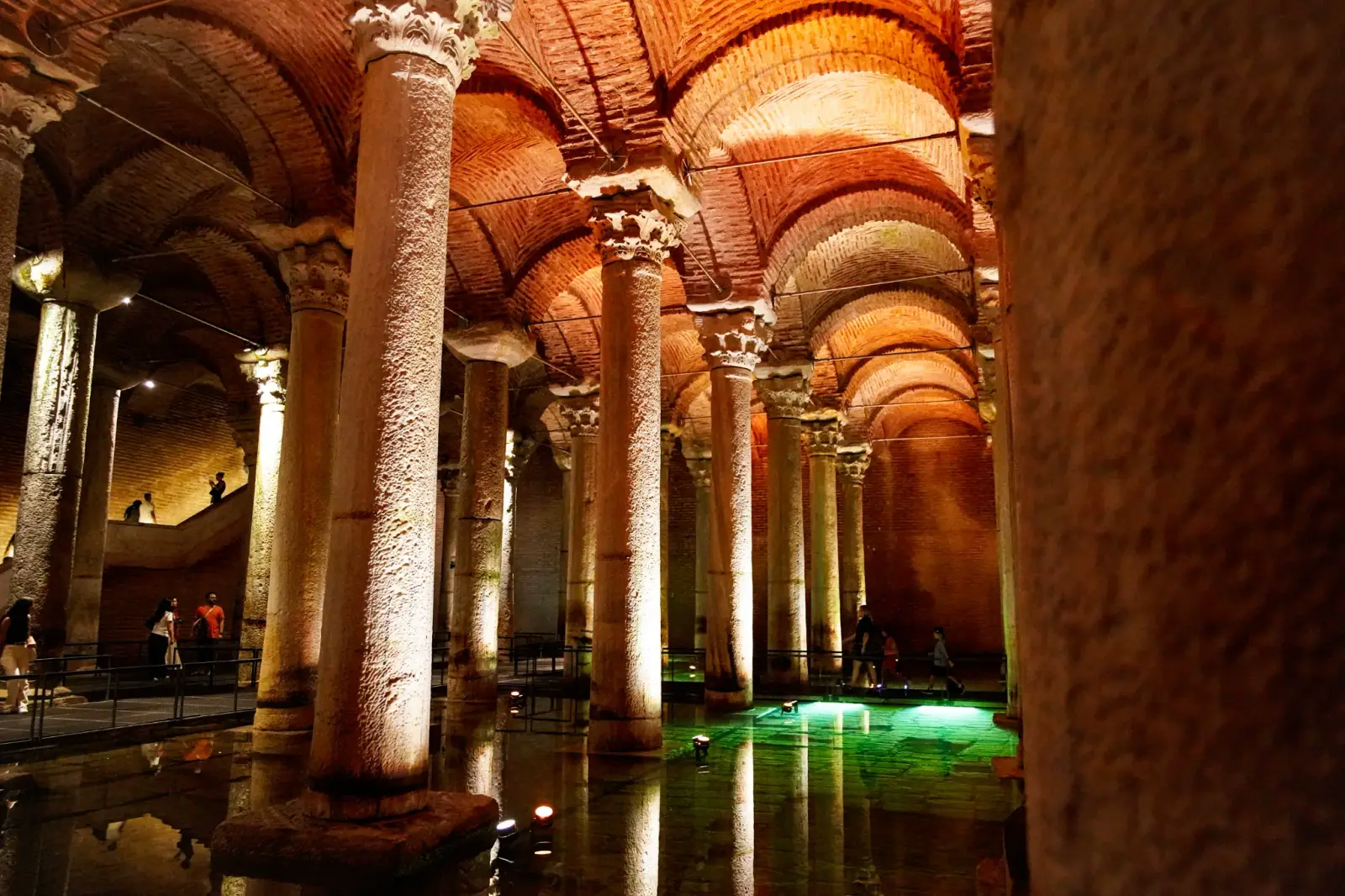
I walked along the raised timber pathways suspended just above the water's surface. What struck me most was the deliberate spacing of the 336 marble columns, salvaged from earlier classical temples across the empire to hold up the vaulted brick ceiling that supplied water to the Great Palace. Subtle lighting cast long reflections across the water, making the vaulted chamber feel almost endless in the dimness.
I took my time meandering along the path toward the far northwest corner of the cistern. There, submerged in shallow water beneath two structural pillars, sit the famous carved Medusa heads. One rests entirely on its side, while the other is turned upside down. Historians often debate whether their orientation was a pragmatic way to match column heights or a symbolic neutralization of the mythic Gorgon’s gaze. Seeing them up close in the soft lighting, tilted at odd angles beneath tons of Byzantine brickwork, gave the underground chamber an eerie, timeless gravity.
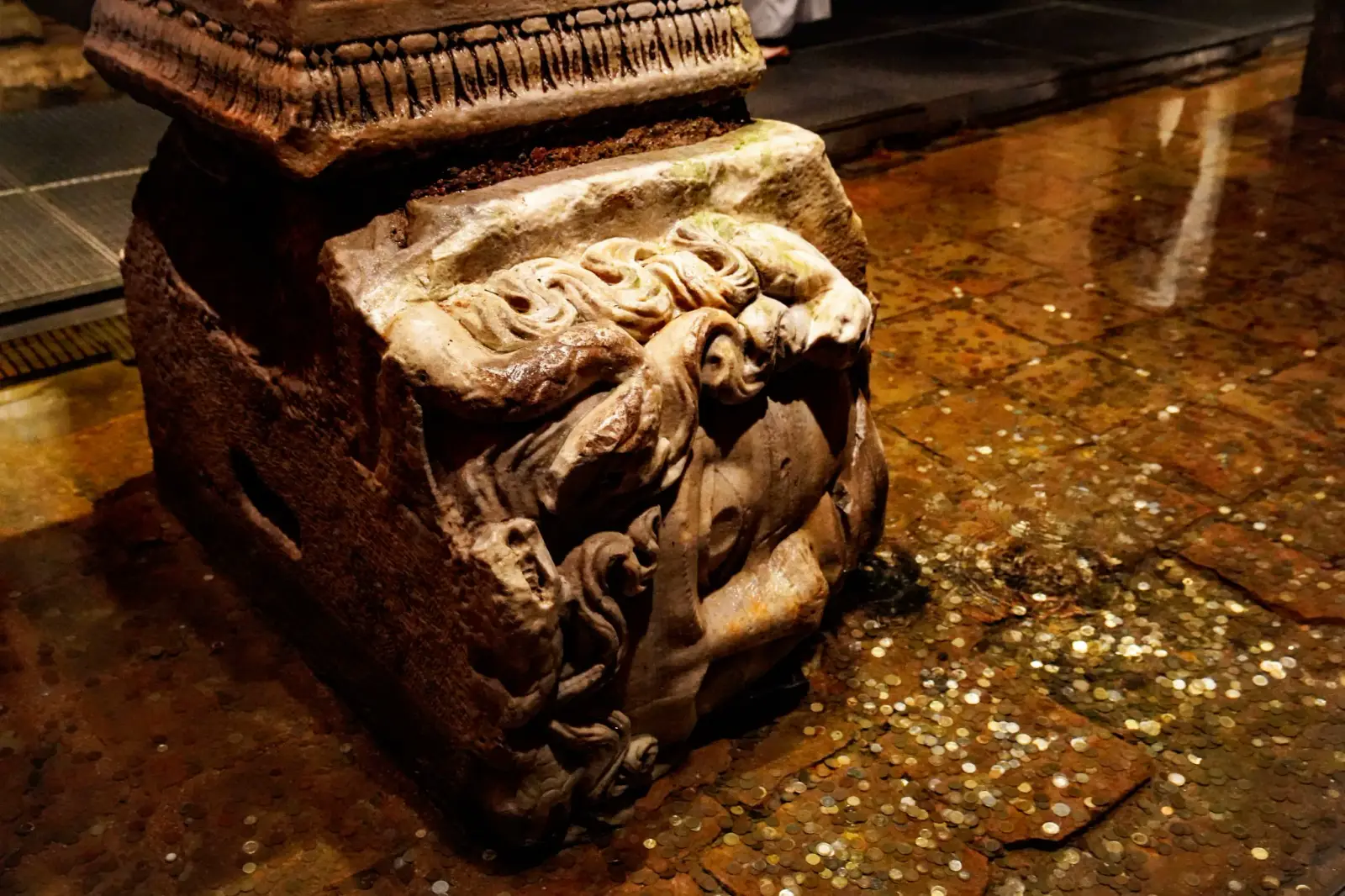
Nearby, I paused by the Weeping Column, its surface slick with moisture and carved with repeating teardrop patterns meant to evoke peacock eyes. After roughly forty-five unhurried minutes in the cool subterranean air, I took the exit staircase back up toward street level, blinking as daylight broke over the city roofs.
Tickets and visiting hoursBasilica Cistern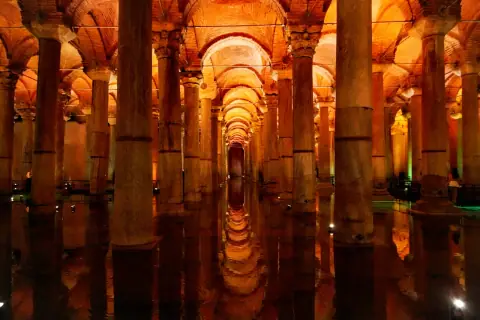
Stillness at Twilight: The Mevlevi Sema Ceremony
After a quiet late-afternoon tea break on a bench beneath the plane trees, I prepared for the final stop of my day: an evening gathering for the Mevlevi sema ceremony in the Historic Peninsula.
I have always felt a deep respect for traditions that prioritise interior stillness over spectacle, and I knew before attending that the sema is not an entertainment show. It is an act of worship, deeply rooted in the philosophical poetry of Jalaluddin Rumi and centuries of Sufi practice. When I entered the hall, the quiet was palpable. The audience was asked to observe absolute silence throughout the ritual, and photography was strictly prohibited so as not to disturb the spiritual focus of the participants.
When the musicians took their seats, the opening notes of the ney—the hollow reed flute—filled the room. Its breathy, plaintive sound set a tone of profound concentration, soon accompanied by the steady, measured beat of the kudüm drum and devotional chanting.
The semazens entered in long black cloaks, known as hırka, symbolizing the earthly tomb. After formal greetings and bows to their spiritual leader, they cast off these black garments to reveal pristine white robes and tall felt hats representing the tombstone of the ego. One by one, they began to turn. With the right palm raised upward to receive grace from above and the left hand turned downward to transmit it to the earth, they revolved with incredible poise and symmetry.
Watching them turn in fluid, silent circles, completely synchronized to the tempo of the classical music, felt almost hypnotic. There was no theatrical drama, only rigorous discipline and quiet meditation. When the ceremony concluded with a final prayer and the dervishes filed out in silence, I sat quietly for several minutes before rising. Stepping back into the cool evening air of Istanbul, my mind felt clear, settled, and completely untangled from the day’s journey.
Tickets and visiting hoursWhirling dervish ceremonyWhat I Would Do the Same Next Time
- Pairing Hagia Sophia with the Cistern: Walking directly between these two Byzantine structures makes logistical sense; they are two minutes apart on foot, yet exploring one above ground and one below ground creates a wonderful contrast in perspective.
- Keeping my bag light and modest: Having my own scarf and wearing clothes with covered shoulders and knees meant I entered Hagia Sophia without any unnecessary stops or delays.
- Ending with the sema: Scheduling the Mevlevi ceremony at the end of the day proved ideal. It created a quiet, reflective conclusion to a day spent studying sacred architecture and ancient water systems.